We believe the best health outcomes for Aboriginal people come when Aboriginal people lead the way.
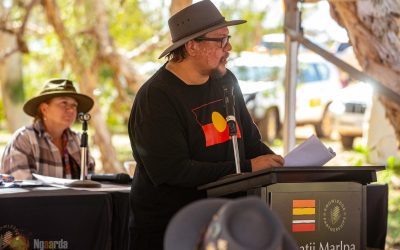
That belief is at the heart of our Caring on Country project, and now, it’s in the hands of someone who lives and breathes it. We’re proud to introduce Henry Lockyer, a proud Banjima man, community leader, and PAHA’s new Caring on Country Health Project Manager.
Henry brings more than just professional experience to the role. He brings lived understanding, deep community connection, and a clear vision for how health can be done differently, and better.
“This work is about more than dialysis”, Henry says.
“It’s about helping our people return to Country safely and with dignity and making sure the care that surrounds them isn’t just clinical, but cultural”.

Image Credit: ABC News
More than a Service: A System of Support
The Caring on Country project is a five year, Aboriginal-led partnership between PAHA and Rio Tinto aimed at strengthening health equity and outcomes across the Pilbara. Backed by a $5 million investment and a clear direction guided by the PAHA Aboriginal Reference Council, Traditional Owners and representatives from Prescribed Body Corporates on Rio Tinto’s Regional Implementation Committee, the project’s first focus is ensuring the success of the Tom Price Dialysis Unit through culturally safe, wraparound support for the community.
The upcoming dialysis unit in Tom Price is a critical piece of infrastructure, and Henry’s role focuses on the services that wrap around the treatment: the people, homes, education and support systems that make remaining on Country possible.
“Dialysis doesn’t work in isolation. If someone’s back on Country but still must travel hundreds of kilometres for podiatry, dental, or other support, then we haven’t solved the problem. We need to look at the whole picture – the patient, their carer, their home, their family’.
As part of his role, Henry will explore models for a culturally informed outreach team to support communities within the Shire of Ashburton Tom Price, Bellary Sprints, Wakathuni and surrounding areas. This may involve working with our member Aboriginal Medical Services to design a team that includes a GP, Aboriginal Health Practitioner, and other community support. But he’s not rushing to drop in solutions.
Instead, he’s listening first.
“The people know what they need. My job is to sit with community, walk with community, and make sure those voices shape how we move forward. Any future model will be shaped in consultation with local voices. That’s how Aboriginal health should be done.”
Health Begins at Home
From hygiene education to housing conditions and carer wellbeing, Henry sees health as something that starts long before a treatment begins and lasts long after it ends.
“If someone’s home environment isn’t set up for dialysis – if the standards aren’t at the right level, or if the requirements aren’t understood by family, it affects their care. That’s where education comes in, and where we start building healthier homes, not just healthier patients”.
He also sees the ripple effect, that improving the health of one person also often lifts the health of a whole household. The project really is more than just about those on dialysis; it’s about raising the baseline for everyone around them.
Community at the Centre
Henry is currently meeting with local organisations, Traditional Owners, families and service providers, building relationships and preparing for community engagements in the months ahead.
His approach is grounded in humility and deep respect.
“I’m not coming in to tell people what to do. I’m here to yarn, to listen and to make sure what we build together actually works for our Peoples. The community have powerful stories. Our job is to capture those stories in a way that feels right, that respects the story, and the storyteller”.
Henry’s appointment is a living example of what we stand for, and a reflection of what’s possible when leadership is grounded in culture and driven by purpose.
“This work has to come from us. Our communities know what they need, we just need to make sure the system listens”.

Image Credit: Ngaarda Media
We’re honoured to walk this path with Henry and the communities of the Pilbara. And we’re excited to share the journey with you.
Want to follow Henry’s journey and hear more community voices shaping this work? Follow us on socials or subscribe to our newsletter below for updates.